
This Week's Brief
Cop30 Kick Off, Earthshot Winners, Sudan Rages On, Assasination Attempt Claims, Miss Universe's Misogynist Drama & Don't Trust AI To Tell You The News
Letter from the Editor,
This week, The Chief Brief has landed in Iceland for the Reykjavik Global Forum, the very place where the spark for The CB first caught fire. It’s where we realised the world was ready for a reset in how it tells stories about women and equality.
To rebuild trust in women leaders, the conversation needs to move beyond the tired us vs. them gender framing. It’s time to shift the spotlight to the real work; the interconnected, cross-sector stories shaping policy, business, and technology across borders. After all, in a hyper connected world what happens in Beijing can have a ripple effect in Nairobi, London, New York or here at Reykjavik and vice versa.
But, most of all, it’s time to centre the expertise of the women actually leading and solving global challenges, rather than the endless noise of gender-driven tokenism.
We’re gearing up to launch our podcast, RantAge Point, in the new year. As part of that, we sat down with former First Minister of Scotland, Nicola Sturgeon, to talk about the men who shaped her political journey, the ripple effects of Donald Trump and Nigel Farage on UK and EU politics, and whether she’s changed her mind on the policies she championed over 27 years in politics.
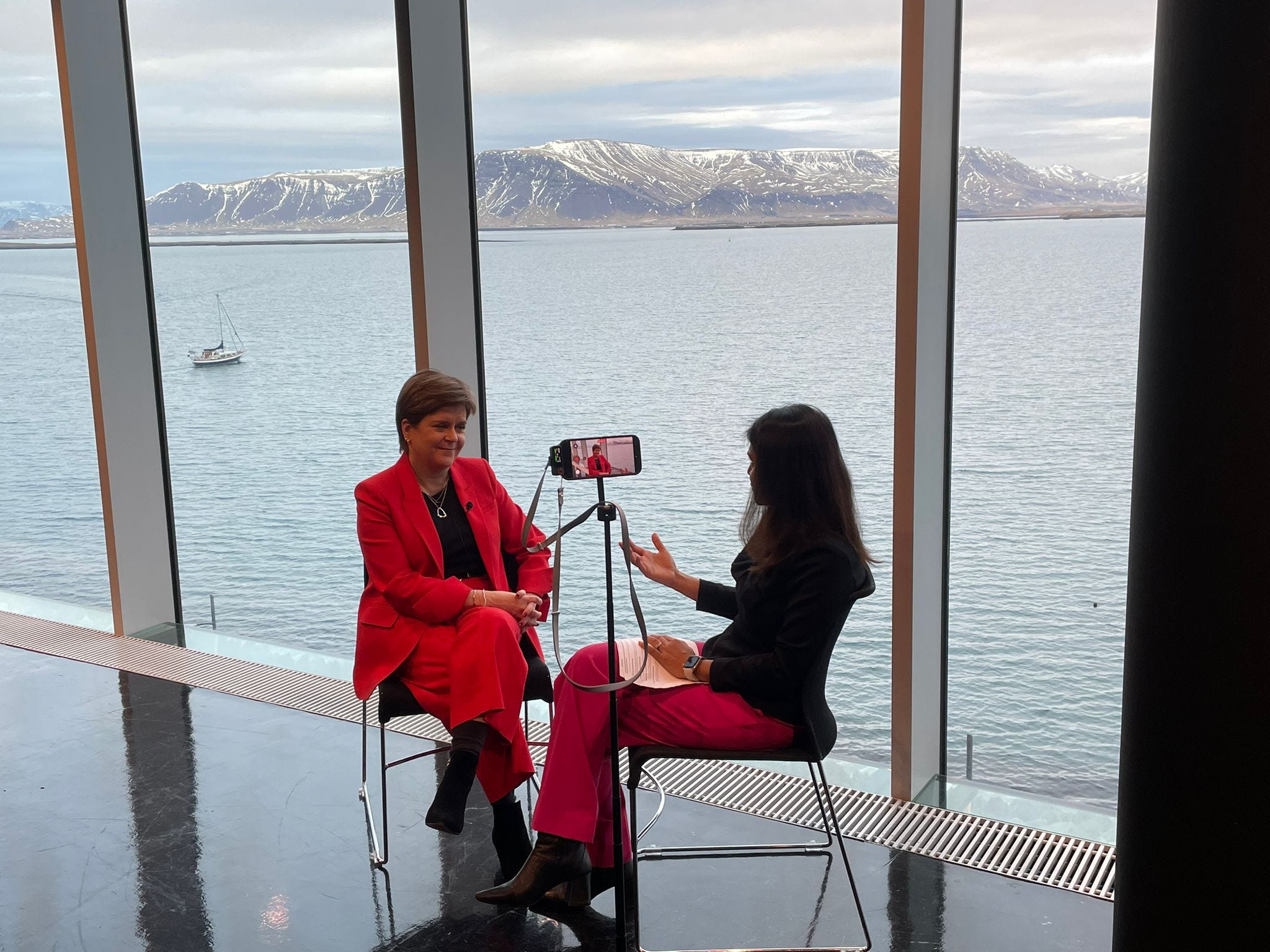
Later this week, we’ll bring you the Reykjavik Global Index and what it reveals about the tsunami of distrust in female leadership and why there’s never been a better moment to shift the lens from tokenism to true expertise. We don’t need influencers with no track record, or the same twelve women speaking for 51% of the planet. We need the voices of those rewriting business strategies, bravely telling the stories less told, setting legal precedents and foreign and economic policy for everyone’s good.
Societies aren’t built by women alone, and no female leader works in a vacuum of “women’s issues.” Every so-called gender issue, polarising as it now seems to be is actually a societal one affecting women and men, boys and girls alike.
That’s what The Chief Brief is laser-focused on: telling stories of those leading, fixing and, yes, sometimes being part of the problem. They all just happen to be women.
At Reykjavik, we’re asking how to widen the conversation so progress made so far doesn’t move backward and how can we truly amplify the solutions women are driving across the world.
A quick aside. If seeing the Northern Lights is on your bucket list (It was on mine!) make your way to Iceland this winter! The peak solar flare activity for the aurora borealis is occurring in 2025 as the sun reaches its solar maximum. This intensified solar activity leads to more frequent and powerful auroras, making this period one of the best in over a decade to see the Northern Lights.

Now, on to the stories you may have missed this past week.
This Week’s News
(These pins mark the stories with deeply buried, but globally significant signals.)
📌 COP30 Kick Off
📌 Earthshot Prize Winners
📌 Sudan Rages On
📌 Bombs and Death in Delhi & Islamabad
📌 Assassination Attempt Claims
📌 BBC Turmoil
📌 Miss Universe Misogyny and Drama
📌 Chinese CryptoQueen Fraud Jailed In UK
📌 ECB Top Job Race
📌 Don’t Get Your News From AI: EBU Research
World, Politics, Society This Week
COP30 Kick-Off
COP30 climate negotiations kicked off in Brazil, with many global heads of state giving the Amazonian negotiations a miss. Brazilian Environment Minister Marina Silva has pushed for the voices of indigenous communities and women to be part of an ethical approach to the climate talks, as Brazil positions this year’s COP as the “Cop of truth”. Read more in The Guardian
Earthshot Winners
The five Winners of The Earthshot Prize 2025 have announced, with women making up 3 of the 5 winners. They have recieved $1 million each to develop their planet saving initiatives. The Winners are re.green, The City of Bogotá, The High Seas Treaty (Rebecca Hubbard, Director of High Seas Alliance), Lagos Fashion Week (Omoyemi Akerele, Founder of Lagos Fashion Week), and Friendship (Runa Khan, Founder of Friendship). Read more at Earthshot Prize
No Sign of De-escalation In Sudan
The United Nations has warned that fighting in Sudan is set to intensify, even as the paramilitary RSF agreed to a U.S.-brokered truce after more than two years of war with the national army. UN human rights chief Volker Türk said there is “no sign of de-escalation.” It is worth noting that women remain excluded from peace negotiations. The UN Secretary-General’s latest report on Women, Peace and Security found that in 2024, around 676 million women lived within 50 kilometres of active conflict, the highest number since the 1990s. Read more at Al Jazeera
Bombs, Deaths, Blame
Pakistan-Afghanistan-India tension: A car bomb killed at least 8 people in India’s capital New Delhi, while a suicide bomber killed 12 people in an Islamabad court house. Both countries have pointed fingers at terrorism and each other for the blasts. Read more about India in The Hindu & Read more about Pakistan at Al Jazeera
Assassination Attempt Claims
An elite Iranian military unit plotted to assassinate the Israeli ambassador to Mexico, Einat Kranz Neiger, according to a US official familiar with the matter. The official (speaking on the condition of anonymity) claims the plan, hatched by the Iranian Revolutionary Guard Corps’ (IRGC) Quds Force, was initiated at the end of 2024 and was active through the first half of this year. Iran has rejected the allegation, calling it a “media invention, a great big lie,” aimed at souring its relations with Mexico. Mexican authorities say they have no record of an alleged plot against the Israeli ambassador. Read more at CNN
Business This Week
BBC Turmoil
Deborah Turness, CEO of BBC News, resigned following backlash over a Panorama documentary that edited a Donald Trump speech, allegedly giving a misleading impression about his role in the Capitol riots. She stated the controversy was harming the BBC and accepted responsibility, but firmly denied claims that BBC News is institutionally biased. Turness’ departure comes alongside Director-General Tim Davie, marking a tumultuous period for the broadcaster. Read more at AP
ECB Top Job Race
Four of six European Central Bank board members will be replaced by 2027, including Vice President Luis de Guindos, whose term ends next May. The choice of his successor is seen as pivotal to the race for ECB President Christine Lagarde’s eventual replacement in that same year. Eurozone capitals are already manoeuvring as competition for the ECB’s top jobs intensifies. Read more in The Financial Times
Crypto Queen Goes To Jail
A Chinese woman who bought cryptocurrency now worth billions of pounds using funds stolen from thousands of Chinese pensioners, is due to be sentenced in the UK for money laundering. More than 100,000 Chinese people invested their money in her company. The raid that captured her in a mansion in the upscale neighbourhood of Hampstead, in north London last year was one of the world’s single largest crypto seizures. Read more at BBC
Pageant Drama
The Miss Universe Organisation faced fresh controversy this week after contestants walked out following a heated exchange between Mexico’s Fatima Bosch and Nawat Itsaragrisil, the pageant’s vice president for Asia. Itsaragrisil, who also runs Miss Universe Thailand and founded Miss Grand International, was caught on video shouting at Bosch and threatening contestants who intervened. His tearful apology has been poorly received, prompting the MUO president to ban him from further involvement in the pageant. Read more at AOL
AI This Week
Don’t Get Your News From AI: EBU Research
New research coordinated by the European Broadcasting Union (EBU) and led by the BBC has found that AI assistants – already a daily information gateway for millions of people – routinely misrepresent news content no matter which language, territory, or AI platform is tested. Read the full report at EBU
Involving 22 public service media (PSM) organizations in 18 countries working in 14 languages, it identified multiple systemic issues across four leading AI tools.
Key findings:
45% of all AI answers had at least one significant issue.
31% of responses showed serious sourcing problems – missing, misleading, or incorrect attributions.
20% contained major accuracy issues, including hallucinated details and outdated information.
Gemini performed worst with significant issues in 76% of responses, more than double the other assistants, largely due to its poor sourcing performance.
Comparison between the BBC’s results earlier this year and this study show some improvements but still high levels of errors.
A Request to our subscribers:
Please leave a comment to engage with us! Like and share widely! These are the only ways to keep The Chief Brief free and possible.
Help us beat the algorithm! Spread the word! Women are more than a check box in world affairs!